How the SASSA Appeal Process Really Works | Full Guide
The SASSA Status Check appeal process is often described as a “second chance,” but this description is misleading. An appeal is not designed to reassess your hardship or re-evaluate your life circumstances from scratch. Instead, it is a structured administrative review focused on whether SASSA’s original decision was made correctly according to its rules and verification systems.
This difference explains why many appeals fail even when applicants genuinely believe they qualify.
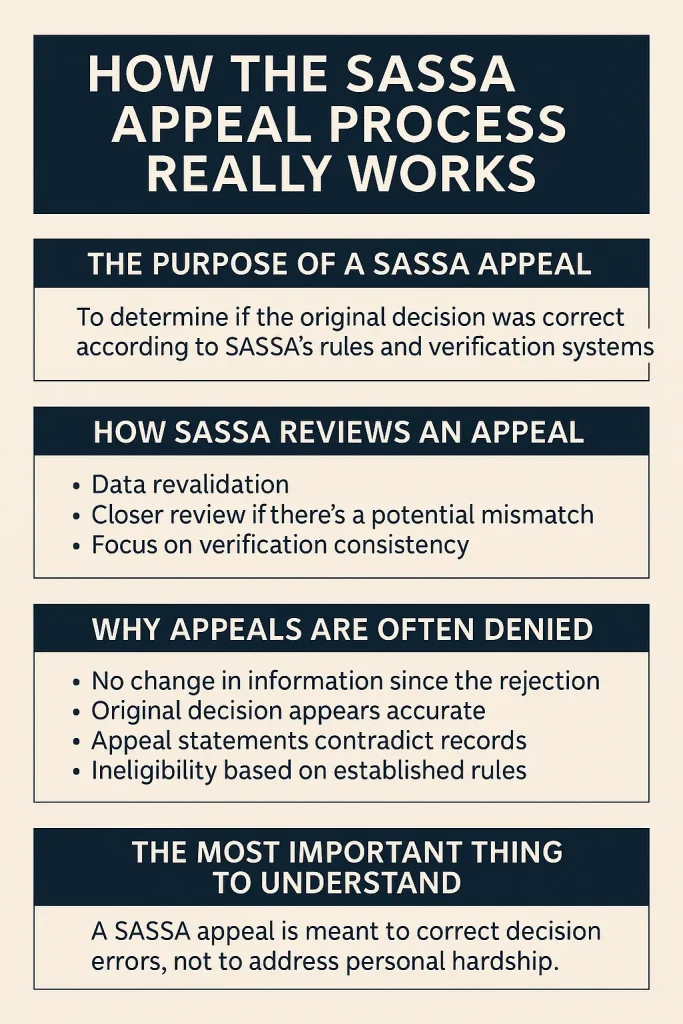
The Purpose of a SASSA Appeal
A SASSA appeal exists to answer one question only:
Was the original decision correct based on the information and verification available at the time? The appeal process is therefore backward-looking. It does not ask whether your situation has worsened or whether you currently need assistance more than before. It examines whether the rejection or cancellation followed SASSA’s eligibility framework.
This is why appeals often feel impersonal. The system is designed to protect consistency, not to negotiate outcomes.
How SASSA Reviews Appeal
Once an appeal is submitted, it enters a review environment that is largely system-driven. Human reviewers do not begin by reading personal explanations. Instead, the process starts with data revalidation.
SASSA’s systems reconfirm identity records, banking indicators, income signals, and grant-specific eligibility rules. If these checks still support the original rejection, the appeal is unlikely to move further.
Only when there is a potential mismatch—such as unclear income signals or borderline eligibility—does closer review occur. Even then, the review focuses on verification consistency, not personal hardship.
Why Appeals Feel Ignored or Automatic
Many applicants feel that their appeal was never properly read. In many cases, this perception is accurate. If the appeal does not introduce information that directly affects the original rejection trigger, the system has no reason to escalate the review.
This is why repeating statements such as “I have no income” or “I am unemployed” rarely changes outcomes. If the system already detected financial activity or support, repeating those claims without addressing the contradiction does not alter the result.
Role of Consistency
One of the most critical but least discussed factors in appeal outcomes is consistency. SASSA compares your appeal statement against your original application, previous reconsiderations, and existing records.
When explanations shift or details change, the appeal becomes weaker. Even small inconsistencies can signal unreliability in the system, which reduces the likelihood of approval.
Successful appeals usually clarify a specific issue rather than introduce new narratives.
Why Appeals Take So Long
SASSA appeals are not reviewed individually in real time. They are processed in batches, often after verification cycles run. This means timelines vary significantly.
Delays also occur because appeals compete with new applications, reconsiderations, and payment verifications. The system prioritizes volume management over speed, which is why applicants often wait months without updates.
Lack of feedback does not mean inactivity; it usually means the appeal is queued.
When an Appeal Has Realistic Chances of Success
An appeal has a realistic chance of success when it addresses a specific technical issue, such as incorrect income detection, outdated banking data, or misapplied eligibility criteria.
Appeals are far less effective when the rejection is based on a rule that clearly disqualifies the applicant, regardless of personal need.
Understanding this distinction saves time and emotional energy.
The Most Important Thing to Understand
The SASSA appeal process is not designed to fix hardship. It is designed to correct decision errors. When applicants approach appeals with this understanding, they are far more likely to submit relevant, focused, and effective appeals.
FAQs
Can I submit the same information again in an appeal?
You can, but it rarely helps. If the original information already triggered rejection, repeating it without clarification usually leads to the same outcome.
Does SASSA read personal explanations in appeals?
Personal explanations are only considered if they directly relate to the rejection reason. Emotional or general hardship explanations do not influence administrative decisions.
Can an appeal approve a grant that I clearly don’t qualify for?
No. Appeals cannot override eligibility rules. They only correct errors in how those rules were applied.
Is it worth appealing if I don’t know why I was rejected?
Appealing without understanding the rejection reason significantly lowers your chances. Appeals are most effective when they respond directly to a known issue.